Technology
It was 1995 when we opened our first production plant in Jihlava and laid the foundations of KOSYKA. We started with the production of cable harnesses for consumer electronics, industrial electrical engineering. Four years later, in 1999, after a successful start, we started production in a second plant in Jamny, not far from Jihlava. In 2005, we started producing cable harnesses for the automotive industry. But we didn't just stop at growth - we also wanted modern facilities. And so in 2011 we completed a new production and administration facility in Jihlava's Industrial Zone II, where you can still find us today. We are currently around 120 people and we are still driven forward by the same energy as when we started. Whether it's production, innovation or simply that we want to be a quality and reliable partner for our customers.
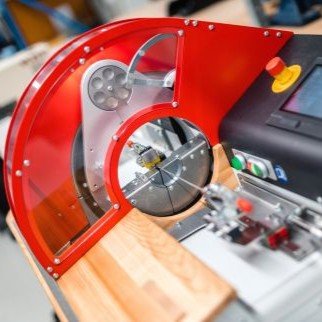
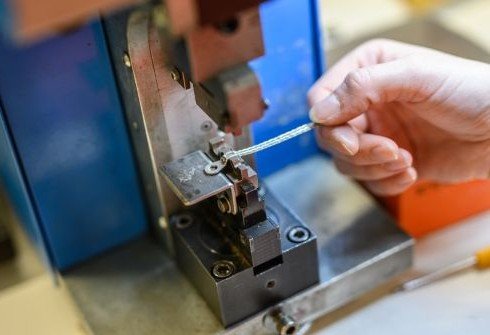
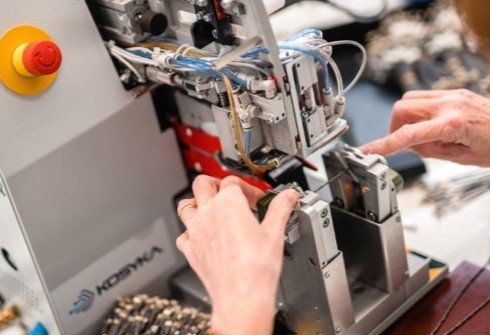
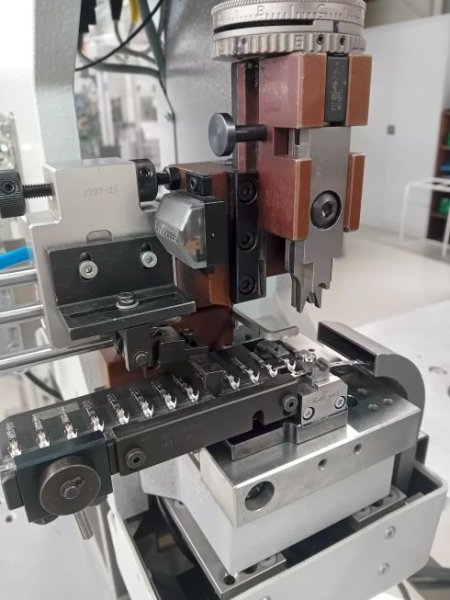
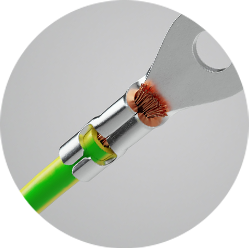
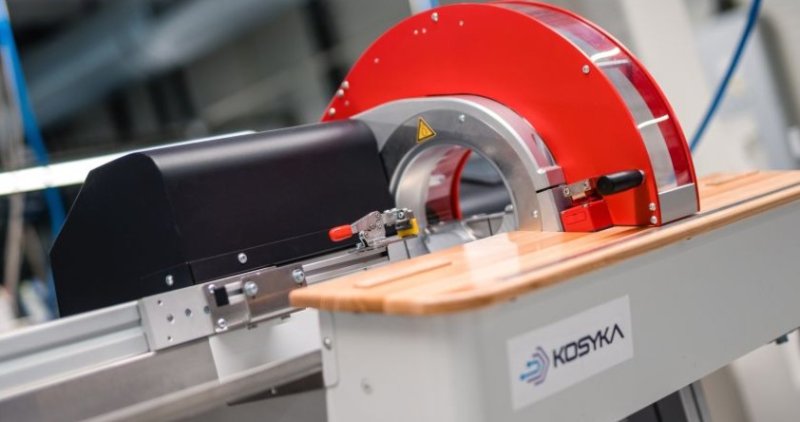
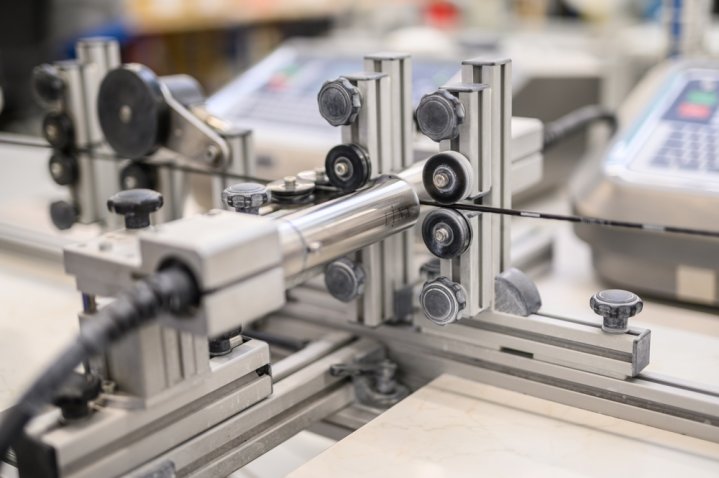
is a technology for mechanically joining a wire to a contact or terminal. A properly executed crimp ensures a reliable electrical connection and high mechanical strength of the joint. The crimping process is performed using crimping tools. Emphasis is placed on the geometric properties of the crimp in accordance with IPC standards. Crimped connections are commonly used in the automotive, industrial, and aerospace industries.
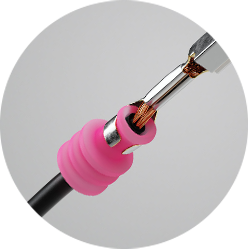
This technology extends the standard crimping process by integrating a sealing element into the contact, which protects the connector against the ingress of moisture, dust, and other contaminants. The seal (most commonly made of silicone or elastomer) is secured to the conductor insulation within the contact during crimping. The process requires precise adjustment of the crimping tools to ensure the seal is compressed correctly without damage, while maintaining the connector’s seal integrity. This technology is particularly critical for applications in the automotive industry, agricultural machinery, and outdoor installations.
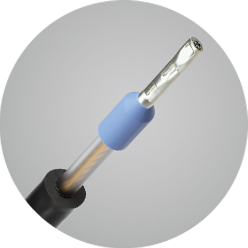
protects the ends of stranded wires from fraying and mechanical damage when plugging into terminals, e.g. in an electrical switchboard. It ensures a firm connection of the individual wires in the conductor and contributes to safe current conduction. The use of glands/terminators increases the safety and reliability of the electrical connection, preventing loosening or poor contact of the wires. Installation of the grommets is simple and quick, and the grommets can be colour coded for easy identification of the conductors.
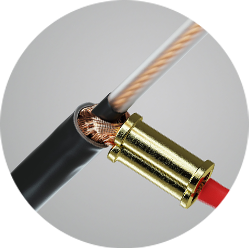
Production technology Splice is a non-soldered crimped connection with a metal strip at the ends of the components. Unlike standard contacts, splice connections are applicable to any electrical and electronic components with different dimensions and materials, such as wires, circuit boards, coils, capacitors, sensors, diodes, fabrics, etc. Compared to welding and soldering, the splice joint is vibration resistant and its quality can be checked both during and after production.
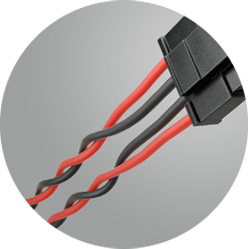
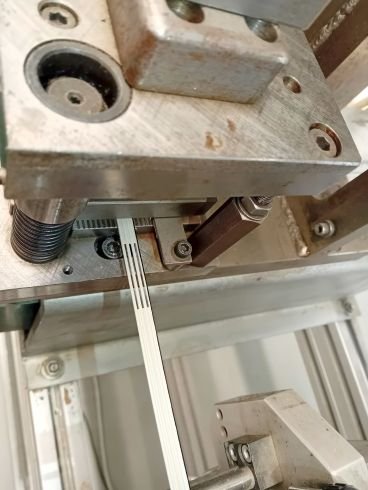
The twisting technology is used for both two and multi-core conductors. Twisted wires achieve better flexibility (flexibility) and thus durability, and for paired data wires it reduces crosstalk between pairs and electromagnetic interference. For multi-pair conductors, the different twist lengths reduce crosstalk and electromagnetic interference between pairs.
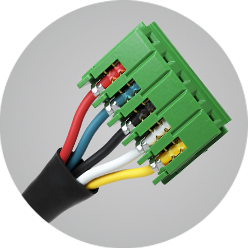
Connectors with insulation displacement contacts (IDC) allow for wire connection without the need for stripping. During assembly, the contact cuts through the wire’s insulation and connects to its core. This technology ensures fast and efficient assembly, high process repeatability, and the elimination of errors associated with improper stripping. The process requires precise alignment of the molded components, including their relative positions, so that the insulation cut is clean and the contact does not collide with the conductor. IDC connectors are primarily used in data, signal, and low-current applications.
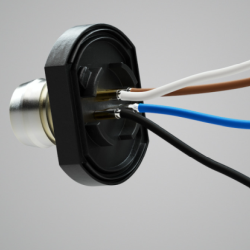
is the process of joining metal parts using molten solder, after solidification it creates a solid electrical and mechanical connection, it is used in working with electronic components, wires and cables. Tin-lead alloy used to be used for good soldering results, but nowadays mainly lead-free materials are used, where tin alloys with other metals improve the final parameters of the joint. The combination of tin, silver and copper (Sn-Ag-Cu) is used for soldering components where high mechanical strength and corrosion resistance are required, while tin-gold alloys (Sn-Au) are used for demanding applications in the aerospace and military industries.
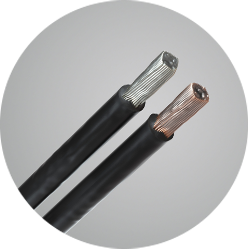
is a process in which the strands of a stranded wire are joined in a controlled manner to reduce its cross-sectional area, improve dimensional stability, and optimize it for subsequent processing, such as crimping or pressing. A compacted conductor has a more compact structure, ensures better contact in a crimped joint, and allows for use in precision contacts with limited space. The technology is used primarily for fine-strand conductors and in applications where high demands are placed on the quality of electrical connections.
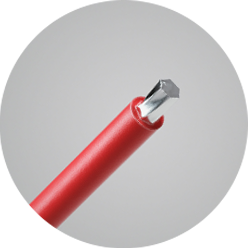
is a process in which a thin layer of tin is applied to the surface of wires or pins of electronic components to protect metal surfaces from oxidation and corrosion, thereby extending life. Tin also has good electrical conductivity, improving the conductivity of the joint and making the tinned surface easier to solder later. The most common method of tinning is by immersing the parts in a molten tin bath, or by using an electrolytic bath where tin is applied to the surface of the metal by means of an electric current.
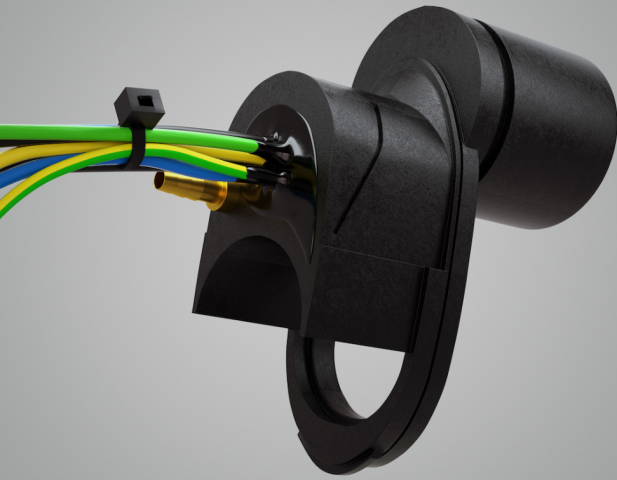
is the process of filling a connector with a gel-like or solid compound. It provides protection against moisture, thermal or physical shock, humidity and vibration
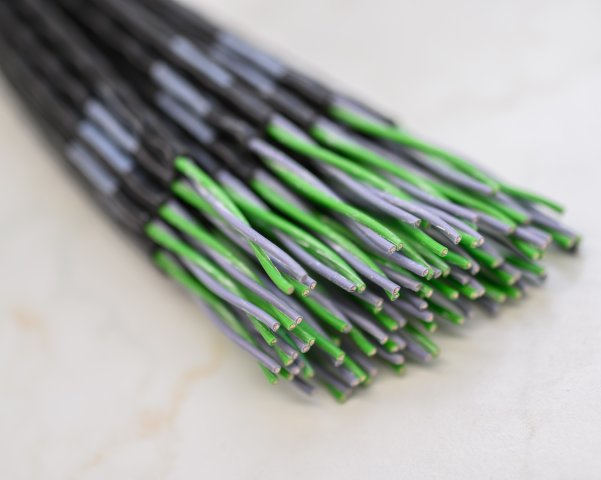
These are the basic operations involved in processing wires and cables. These processes can be performed individually or in combination as part of automated production lines. Cutting is the precise division of wires and cables to the required length within IPC tolerances. Stripping is the removal of the outer sheath of a cable without damaging the individual conductors. Stripping is the targeted removal of wire insulation over a defined length while maintaining the integrity of the wire core. Proper setup of these operations is critical to the quality of subsequent manufacturing steps and the resulting service life of the electrical connection.


 Elektrotechnická asociace České republiky
We are a member of the Electrotechnical Association (EIA), which brings together legal and natural persons of the electronic and electrotechnical industry and also entities that have common interests with the electrotechnical industry. The Association defends the interests of employers on the principles of business democracy.
 Asociace obranného a bezpečnostního průmyslu ČR
We are a member of the Association of Defence and Security Industry of the Czech Republic (AOBP), which brings together companies engaged in research, development, production, trade and marketing of defence and security equipment, materials and services.
 BRNO SPACE CLUSTER
We are a member of the Brno Space Cluster, a regional association of companies focused on the development of the space industry, research and education in Brno and the South Moravian Region.

 Gauner Club SK Jihlava – boxing club Jihlava
KOSYKA supports youth sports activities in Vysočina region.
COPYRIGHT © 2026 kosyka.cz | TVORBA WWW STRÁNEK MACHIN.CZ
